
Common Lawn Problems in Sioux Falls: What They Usually Mean and What To Do Next
Learn how to identify and fix common lawn problems in Sioux Falls, including bare spots, weeds, brown patches, drainage issues, disease, shade problems, and grub damage.
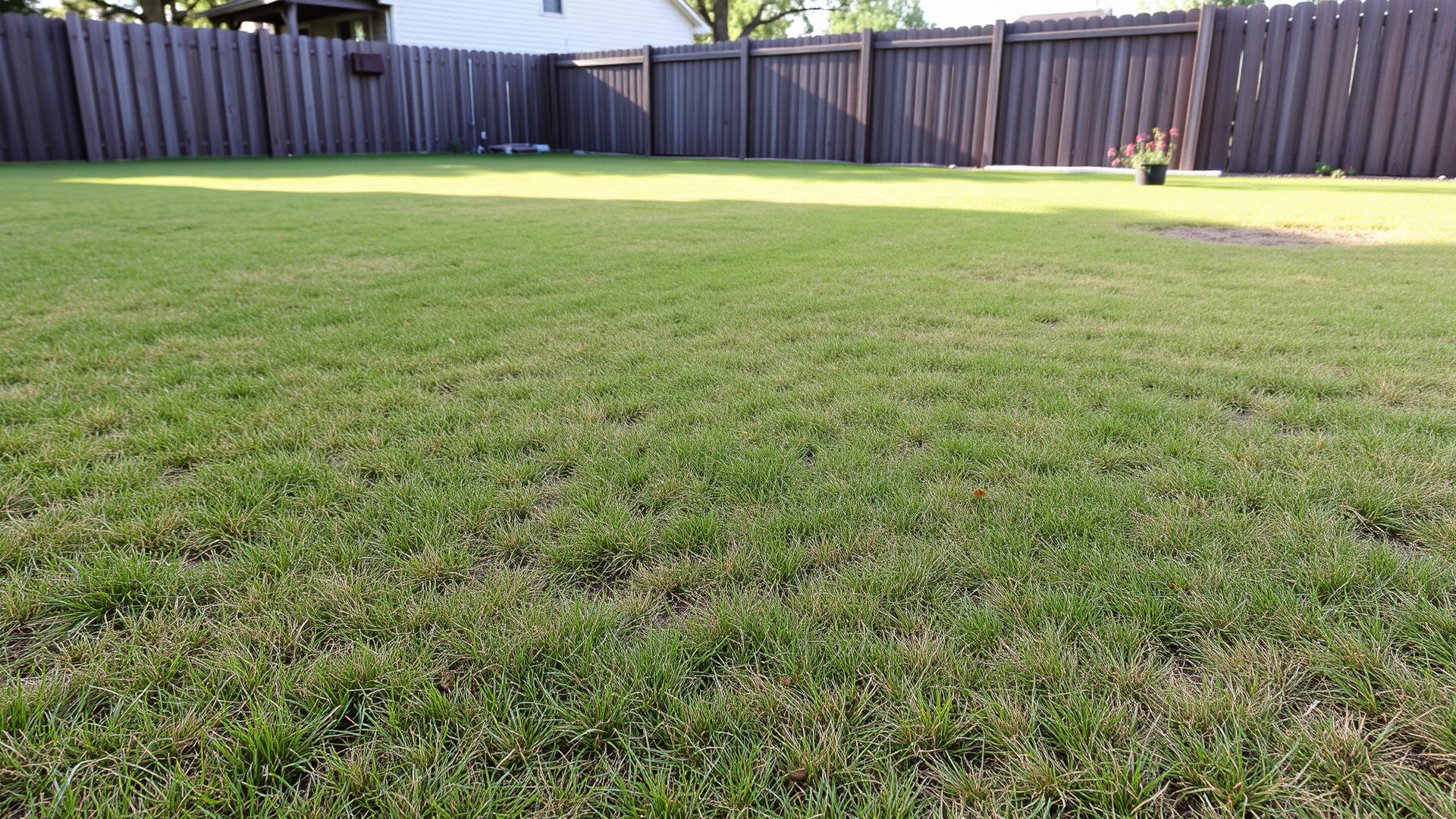
Most lawn problems do not start as big problems.
They start as a thin spot. A patch that looks off. A corner that never seems to dry out. A strip by the driveway that turns brown every year. A place where weeds keep showing up no matter what you do.
That is usually how it goes.
The tricky part is that a lot of lawn problems look similar at first. Brown grass can mean drought. Or disease. Or grubs. Or compaction. Or poor drainage. A bare patch might need seed, but it might also be telling you that the real issue is shade, traffic, salt, or standing water.
That is why this page exists.
The goal is to help you figure out what you are actually looking at before you waste time, money, and effort on the wrong fix.
The short version
A lot of lawn problems are not really lawn problems.
They are water problems. Soil problems. Shade problems. Traffic problems. Timing problems. Maintenance problems.
That is why the right question is usually not, "What product should I use?"
It is, "Why is this happening here?"
If you can answer that, the fix gets much easier.
How to use this page
Start with what you actually see.
Is the lawn thin? Are weeds taking over? Do you have brown patches? Does one area stay soggy after rain? Does grass struggle under trees? Is the turf easy to pull up? Does the same strip by the sidewalk look rough every year?
Find the problem that sounds closest to what you are dealing with, then work from the likely causes.
Bare spots and thin grass
This is one of the most common lawn complaints.
A patchy lawn usually means one of two things. Either the grass never got established well in the first place, or something is making it hard for it to stay thick.
Common causes include:
- summer stress
- poor watering habits
- mowing too short
- soil compaction
- shade
- pet traffic
- repeated foot traffic
- disease
- grub damage
- poor seed-to-soil contact after past repairs
What to do next
Start by asking why that area is struggling.
If it is a small, sunny patch with decent soil, reseeding may be enough.
If it is a recurring problem, check for compaction, drainage, shade, traffic, or salt exposure before you reseed.
If large sections of the lawn are thin, it may be time for a broader recovery plan instead of one more small patch fix.
Weeds taking over
Weeds usually move in where the lawn is already losing ground.
That is why the real issue is often not the weed itself. It is the opening the lawn gave it.
Common reasons weeds take over:
- grass is too thin
- mowing height is too low
- watering is inconsistent
- bare spots were never filled in
- compacted soil is stressing the turf
- the lawn is weak from summer heat or poor growing conditions
What to do next
Do not start with chemicals by default.
Start with the lawn itself: mow higher, water more consistently, thicken weak areas, improve overall lawn density, and hand-pull isolated weeds when practical.
A thicker lawn is one of the best weed-control tools you have.
If weeds are widespread, then targeted treatment may make sense. But the long-term solution is usually improving the turf, not just spraying the symptom.
Brown, dry, or burned-looking patches
Brown patches make people nervous fast.
The hard part is that brown grass can mean a lot of different things.
Sometimes it is simple drought stress. Sometimes it is uneven sprinkler coverage. Sometimes it is disease. Sometimes it is grub damage. Sometimes it is mower stress. Sometimes it is pet urine. Sometimes it is salt damage near pavement.
That is why location matters.
If the whole lawn looks dry during a hot stretch, it may be general heat and drought stress.
If one circular or irregular patch looks different from the surrounding lawn, it may be disease, grubs, or a site-specific issue.
If the grass near pavement or sidewalks is consistently the first to decline, think heat, drought, or salt.
What to do next
Before treating anything, look more closely.
Ask: Is the soil dry or soggy? Does the spot line up with sprinkler coverage? Is it near pavement? Does it peel back easily from the soil? Are there signs of fungus on the blades? Is the damage getting bigger?
If you treat every brown patch like it is drought, you will miss a lot of real problems.
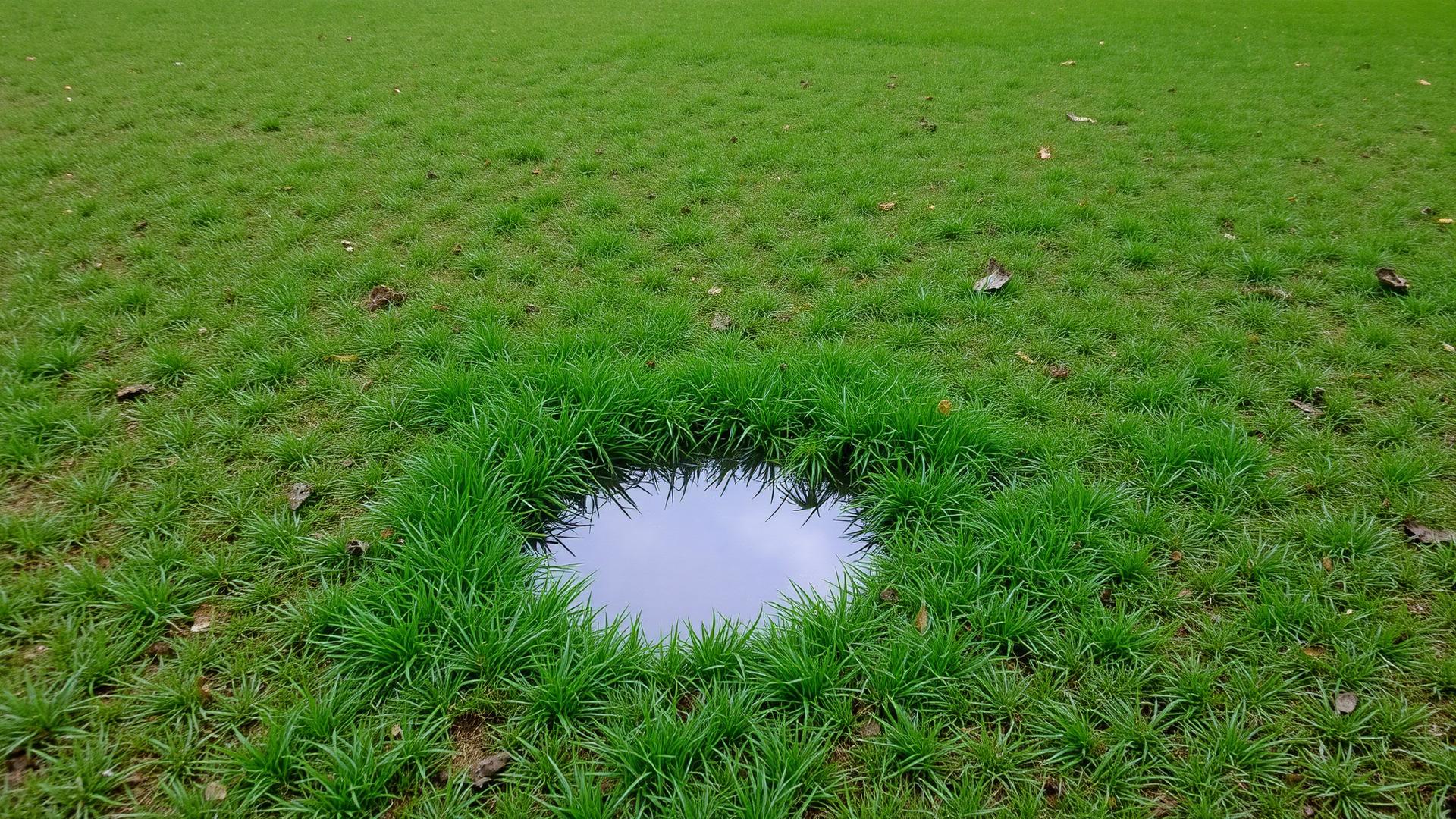
Standing water and soggy areas
If one part of your lawn stays wet long after rain, that is not just annoying.
It is usually a sign that the area has a drainage problem, a grading issue, compacted soil, or a low spot that is collecting water.
Grass does not do well when the soil stays saturated. Roots need oxygen. When the soil stays wet too long, grass can weaken, thin out, discolor, or die off.
These are also the areas where homeowners often keep trying the same thing over and over. More seed. More fertilizer. More patching.
But if the water problem stays, the lawn problem usually stays too.
What to do next
Do not start with seed. Start with the site.
Look at whether the area is lower than the rest of the yard, whether downspouts are feeding that section, whether the soil is compacted, whether runoff is collecting there, and whether the lawn needs regrading, drainage work, or soil improvement.
A soggy lawn area is often a landscape problem before it is a turf problem.
Grass that will not thicken in the shade
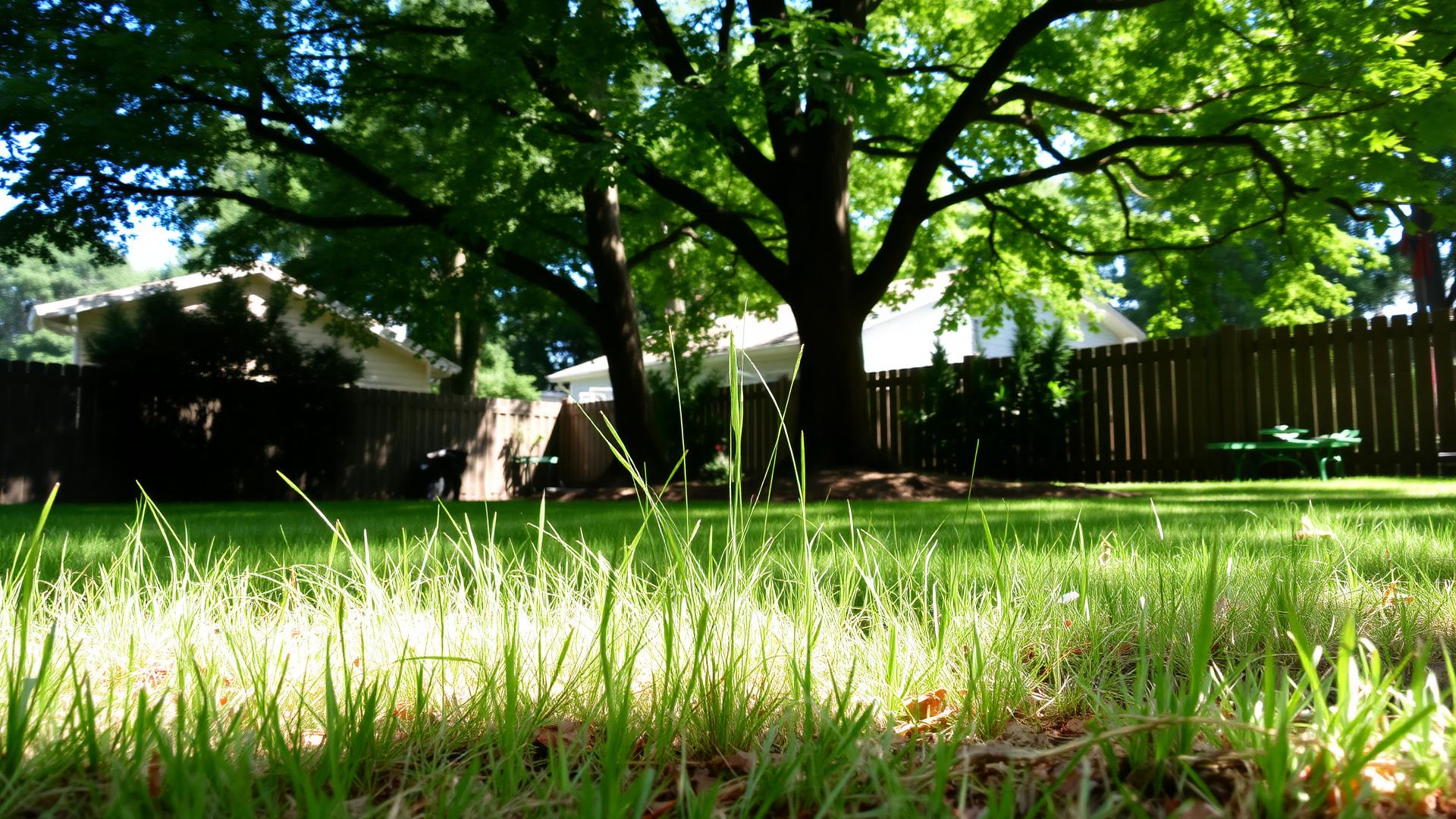
Some lawns struggle simply because they are being asked to grow grass where grass does not really want to grow.
Heavy shade changes everything.
Grass in shaded areas usually gets less energy, dries out differently, often grows more slowly, and tends to thin out faster. Under trees, the lawn may also be competing with roots for water and nutrients.
That is why the lawn under a big tree often looks nothing like the lawn out in full sun.
What to do next
Be realistic about the site.
In shady areas, it usually helps to mow a little higher, avoid overwatering, use seed mixes designed for shade, reduce traffic, and prune selectively if appropriate to improve light and airflow.
And sometimes the best answer is not forcing turf where it does not belong.
In some heavily shaded spots, mulch, beds, or another landscape solution may be a better long-term fit than fighting for thin grass every year.
Fungus or lawn disease
Disease is one of the most overguessed lawn problems.
A lot of people see a patchy lawn and assume fungus. Sometimes they are right. A lot of times they are not.
Still, lawn diseases do happen, especially when weather, moisture, mowing, and airflow all line up the wrong way.
Some signs that point more toward disease: distinct patches that spread, odd discoloration on the blades, powdery, dusty, or cobweb-like material, matted grass after snowmelt, and damage that gets worse in humid or persistently wet conditions.
What to do next
Do not rush straight to fungicide.
Start with the basics: water early in the day, avoid overwatering, mow at the right height, improve airflow where possible, bag or clean up clippings if disease is active and severe, and avoid adding more stress through scalping or heavy traffic.
If the damage is spreading quickly or keeps coming back, it is worth getting a better diagnosis before treating it.
Grubs and insect damage
This is one of the lawn problems people often miss until it gets bad.
A lawn with grub damage may look drought-stressed at first. Then one day the grass pulls up easily, almost like loose carpet.
That is the clue.
When grubs feed on roots, the lawn can no longer hang on well. You may also notice birds, raccoons, or other animals digging in the turf, which is often a sign they are feeding on insects below the surface.
What to do next
Check the edge of the damaged area.
Pull back a small section of turf and look underneath. If the roots are gone or the turf lifts unusually easily, insect damage becomes much more likely.
This is one of those problems where correct identification matters. Not every dead patch is grubs, and not every digging animal means the lawn is full of them.
But if the turf rolls back easily, it is time to investigate further.
Damage near sidewalks, driveways, and curbs
If the same strip near the driveway looks rough every year, pay attention to that pattern.
Grass near pavement deals with extra stress. It gets more reflected heat in summer, more salt exposure in winter, more snow pile pressure, and often more compaction from foot traffic.
That is why these edge zones often decline first.
This kind of damage is easy to misread because it looks like a grass problem when it is really a location problem.
What to do next
If the damage hugs pavement, think bigger than seed.
Look at salt use in winter, where plowed snow gets piled, whether the edge is getting extra heat or drought stress, whether foot traffic is concentrated there, and whether the soil has been compacted over time.
If the cause does not change, the damage usually comes back.
High-traffic wear
Some parts of the yard are basically being treated like walkways.
The side gate. The path to the shed. The shortcut across the front yard. The dog run along the fence.
Grass can handle some use. But repeated traffic in the exact same line usually leads to wear, compaction, and thinning.
This is especially common in family backyards where the lawn is doing double duty as both landscape and pathway.
What to do next
Do not keep pretending the area is low-traffic if it obviously is not.
Sometimes the best solution is stepping stones, mulch, gravel, a defined path, redirecting traffic, or reseeding with wear-tolerant grasses where appropriate.
A lawn often improves when you stop asking one section to do a job it was never going to do well.
The lawn looks different in different areas
This one throws people off all the time.
The front yard looks fine. The backyard is struggling. One side of the house is dry. Another stays damp. One strip grows fast. Another stays pale and thin.
That does not necessarily mean the whole lawn needs one big fix.
It usually means the site conditions are not the same across the property.
Different parts of the lawn can have different sun exposure, shade, soil conditions, watering coverage, traffic levels, compaction, and drainage patterns.
What to do next
Stop thinking of the whole lawn as one single problem.
Treat each section more like its own environment.
A shady back corner may need a different seed mix than a sunny front yard. A dry boulevard strip may need a different watering strategy than the lawn under a tree. Once you look at it that way, a lot of confusing lawn issues make more sense.
When it makes sense to call a pro
You can solve a lot of lawn problems yourself once you identify the real cause. But it may be worth calling a professional if:
- The same problem keeps coming back
- Large areas of the lawn are failing
- The cause is not obvious
- You suspect disease, grubs, or drainage issues
- The lawn has several problems happening at once
- You are tired of trying one fix after another without real progress
Sometimes the most valuable service is not the treatment. It is getting the diagnosis right.
Bottom line
Most lawn problems are easier to solve when you stop guessing.
A thin lawn, a brown patch, a soggy corner, a weedy strip, or a shaded problem area usually has a reason behind it. The best results come from finding that reason first, then choosing the fix that actually fits the situation.
Do that, and lawn care gets a lot less frustrating.
Need help figuring out what is going on?
If your lawn has a few problem areas and you want help figuring out what is really causing them, we can help. We provide lawn care and landscaping services in Sioux Falls and surrounding areas.