
Landscaping That Helps Your Lawn in Sioux Falls
How smart landscaping choices like trees, shrubs, mulch, edging, drainage, and pathways can make your lawn healthier and easier to maintain.
A lot of people think lawn care and landscaping are two separate things.
They are not.
The way your yard is designed has a huge effect on how easy your lawn is to maintain. Good landscaping can solve problems before they start. It can help with drainage. Cut down on wear and tear. Reduce weeds. Protect the soil. Improve shade where it helps. And keep you from fighting the same problem spots year after year.
Bad landscaping does the opposite.
It can create soggy areas, force traffic across weak turf, make mowing harder, waste water, and leave you trying to grow grass in places that were never a good fit for grass in the first place.
That is why this page matters.
A healthier lawn is not just about mowing, watering, and fertilizing. Sometimes the biggest improvement comes from changing the layout of the yard itself.
The short version
A good landscape should help your lawn, not fight it.
That means:
- protecting the turf from unnecessary traffic
- improving drainage where water collects
- using mulch and beds where grass struggles
- choosing plants that fit the site
- making irrigation and maintenance simpler
- giving the yard a layout that actually works
Sometimes the smartest lawn care move is not another lawn treatment.
It is a better landscape decision.
Step 1: Stop expecting grass to do every job
This is one of the most helpful mindset shifts for homeowners.
Not every part of the yard needs to be lawn.
Some spots are too shady. Some are too wet. Some get too much traffic. Some are too narrow, too steep, or too awkward to mow well. Some sit next to pavement and get baked in summer and hit with salt in winter.
That does not mean the yard is bad.
It just means grass may not be the best solution everywhere.
A healthier, easier yard often starts when you stop forcing turf into spots that want to be something else.
Step 2: Use landscape beds where the lawn keeps losing
If one area keeps failing, pay attention to that pattern.
Maybe grass keeps thinning out under a tree. Maybe the strip along the house stays dry and patchy. Maybe the corner by the fence always turns into mud. Maybe the side yard gets worn down into a path every summer.
Those are usually signals.
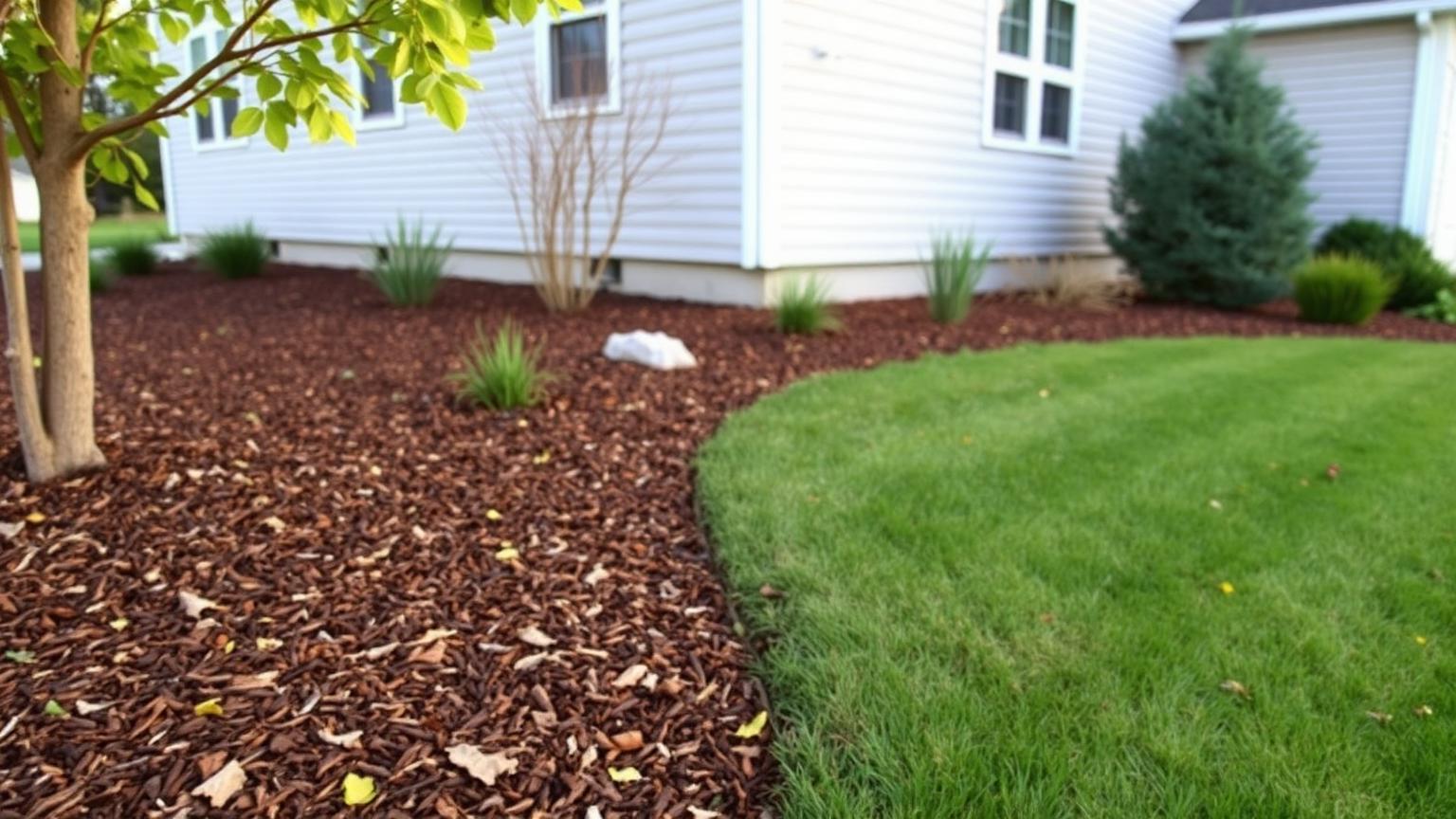
In those spots, a mulch bed, planted border, or expanded landscape area may be a better long-term choice than reseeding the same struggling turf over and over.
This is not giving up on the lawn.
It is making the yard work better.
Step 3: Trees and shrubs can make the whole yard stronger
Good landscaping is not just decorative.
Trees and shrubs can improve the feel and function of the property in a lot of ways. They add structure, create visual interest, help with privacy, soften hard edges, and can make the yard feel more finished.
They can also support the lawn when they are used thoughtfully.
A well-placed tree can create relief from intense afternoon sun. Shrubs can help define spaces and reduce wind exposure in some areas. Plantings can also help guide traffic so people are not constantly cutting across the same section of grass.
The key is choosing plants that fit your site and giving them enough room to mature without crowding everything else.
Step 4: Be smart about where trees go
Trees are great. Poorly placed trees can create years of lawn frustration.
Before planting, think beyond what the tree looks like today.
Think about:
- how wide it will get
- how much shade it will create
- where the roots will compete with turf
- whether it will drop a lot of debris
- whether it will block sprinklers or create mowing obstacles
- how close it is to the house, driveway, patio, or sidewalk
A tree in the right place can improve the yard for decades.
A tree in the wrong place can turn a once-simple lawn area into a constant struggle.
Step 5: Mulch is one of the easiest landscaping wins
Mulch does a lot more than make beds look tidy.
Used well, it helps hold soil moisture, reduces weed pressure, moderates temperature swings, and gives trees, shrubs, and plantings a cleaner and healthier root zone.
It also helps define where lawn ends and landscape begins, which makes mowing and trimming easier.
The big thing to avoid is overdoing it.
You want mulch to help the plant, not smother it. Keep it off trunks and stems, and use it to support the root zone, not bury the base of the plant.
Done right, mulch saves time and makes the whole landscape easier to manage.
Step 6: Edging makes maintenance easier
A clean edge does more than improve appearance.
It also gives the yard clearer boundaries. That matters because creeping grass, messy bed lines, and fuzzy edges make everything harder to maintain. Mowing gets sloppier. Trimming takes longer. Weeds move more easily between spaces. Beds start to lose their shape.
A defined edge helps solve that.
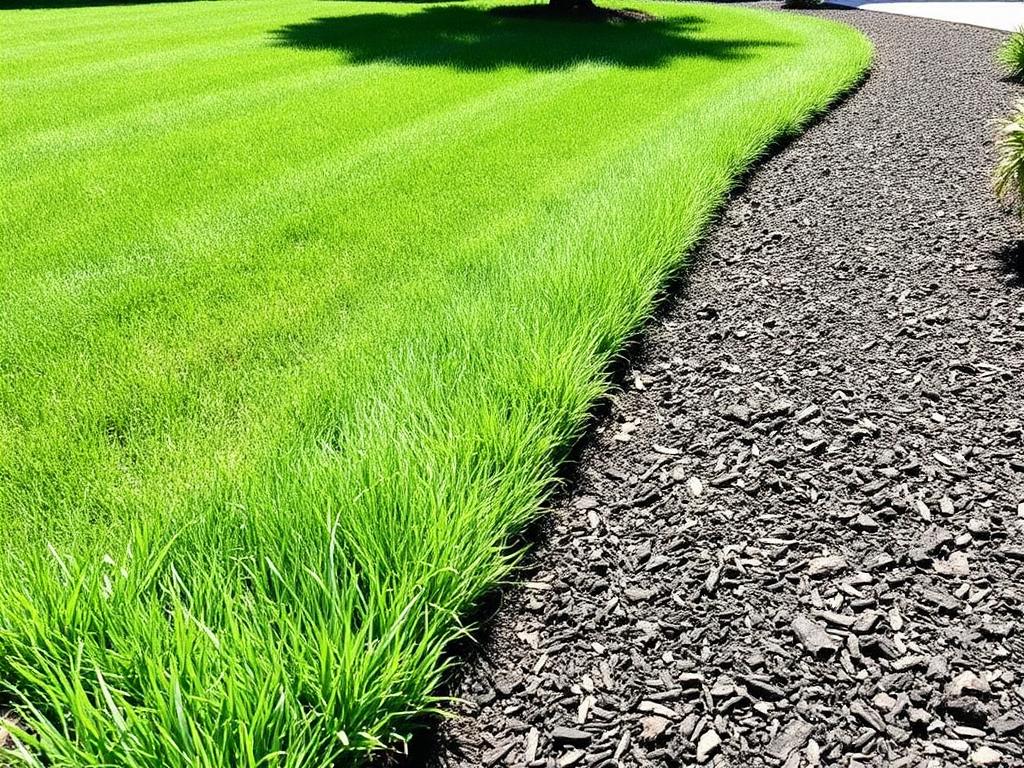
Whether it is a natural edge, metal edging, stone, or another material, the goal is the same. Give the lawn and the planting areas a clear line so the whole yard looks more intentional and stays easier to manage.
Step 7: Pathways can save your lawn
Some parts of a yard are always going to get walked on.
The side gate. The route to the shed. The shortcut to the backyard. The stretch between the patio and the playset. The dog run along the fence.
If people use the same route every day, the lawn usually loses eventually.
That is why pathways matter.
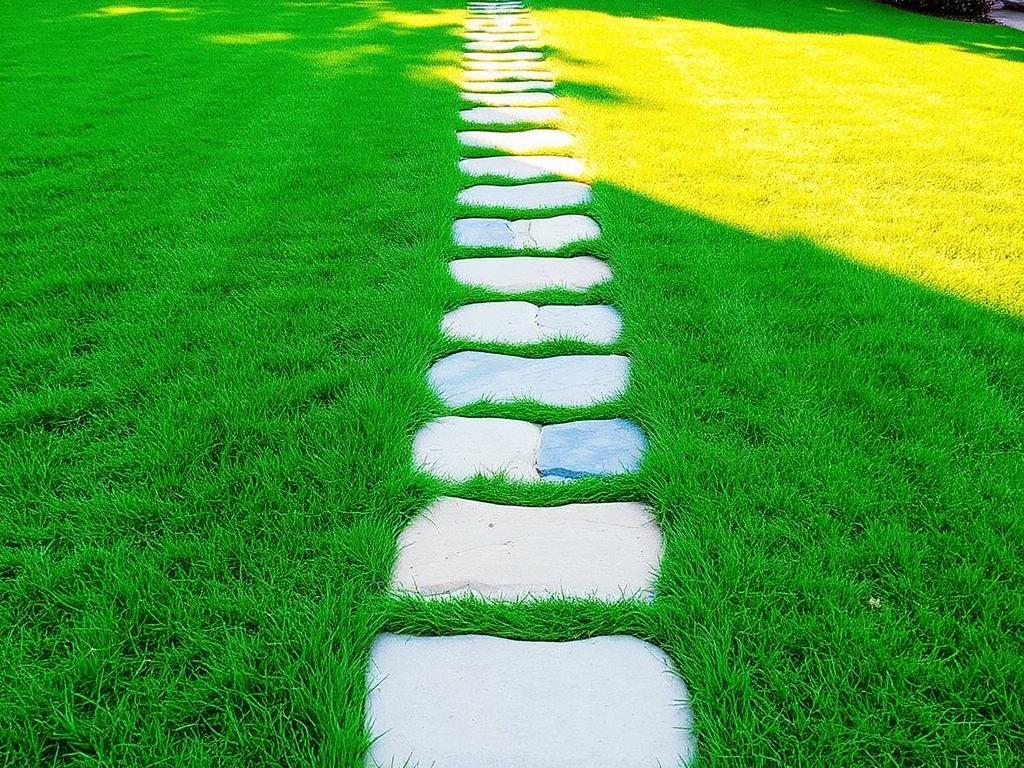
Stepping stones, gravel, mulch paths, or other simple walkways can protect turf from repeated wear and help the yard function better. They also make the space feel more designed instead of worn down by accident.
A path is often cheaper and easier than fixing the same bare strip over and over.
Step 8: Drainage fixes often solve lawn problems faster than lawn products
If water sits in the same areas after every rain, that is not just a turf issue.
It is a drainage issue.
And drainage issues rarely get solved by seed, fertilizer, or lawn treatments alone.
Sometimes the fix is simple, like adjusting a downspout or smoothing a low spot. Sometimes it takes regrading, a drain solution, or reshaping part of the landscape so water moves where it should.
This is one of the biggest ways landscaping can help the lawn.
When water moves correctly, grass has a much better chance.
When water sits and stagnates, the same problem areas usually come back no matter what else you try.
Step 9: Group plants by water needs
This is one of those smart landscaping ideas that saves effort over time.
Not all parts of your yard need the same amount of water. And not all plants want the same thing.
When you group plants with similar water needs together, the whole yard becomes easier to irrigate. You waste less water. Plants are healthier. And you are less likely to end up overwatering one area just because another area needs more.
This is especially helpful if your landscape includes turf, shrubs, perennials, and beds that all behave differently.
A yard gets a lot easier to manage when everything is not fighting the same watering schedule.
Step 10: Think about mowing before you install things
This is one of the most overlooked landscaping basics.
A yard may look good on paper and still be a pain to mow.
Tight curves. Tiny islands. Awkward bed shapes. Narrow strips of grass between hard surfaces. Decorative features dropped right in the mower path. These all create extra trimming, awkward turns, and more time spent cleaning up edges.
That is why good landscaping should also think about maintenance.
The best layouts usually make the yard simpler to mow, not more complicated. That means smoother transitions, fewer awkward turf pockets, and shapes that make sense once the mower is actually in the yard.
Step 11: Use landscaping to solve micro-problems
A lot of lawn frustration comes from the same few problem spots.
The muddy corner. The dry strip next to the driveway. The tree area that never thickens up. The gate path that gets destroyed every summer. The section of lawn that always seems a little behind the rest.
These are not always problems that need a lawn-wide solution.
Sometimes they need a local one.
A small bed expansion, a tree ring, a redirect for foot traffic, a new planting area, some mulch, or a drainage tweak can solve a very specific issue without turning the whole yard into a project.
That is one reason landscaping matters so much. It gives you tools other than just treating the whole lawn the same way.
Step 12: Landscaping should make the yard easier to live with
A good yard is not just healthy.
It is usable.
It should make sense for how you actually live. Where kids play. Where people walk. Where dogs run. Where water goes. Where snow gets piled. Where the sun hits hardest. Where you want privacy. Where you want less maintenance.
That is why the best landscaping choices are not just about curb appeal.
They are about making the entire property easier to use, easier to care for, and easier to enjoy.
When landscaping does that, the lawn usually gets better too.
Watch Out
Common landscaping mistakes that hurt lawns
Planting trees without thinking ahead
A tree may look great now and create major shade, root, or maintenance issues later.
Forcing grass into bad spots
Deep shade, soggy corners, and high-traffic routes often need a different solution.
Ignoring drainage
Water problems usually need landscape fixes, not just turf fixes.
Creating awkward bed shapes
If the layout makes mowing harder, the whole yard becomes more work.
Skipping edging and bed definition
Blurry lines between lawn and beds lead to more trimming, more creep, and a messier-looking yard.
Using one watering approach for everything
Lawns, trees, shrubs, and planted beds often need different watering habits.
When it makes sense to call a pro
You may be able to handle simple landscaping improvements yourself if the changes are small and the problem is clear.
But it may be worth bringing in a professional if:
- the lawn keeps failing in the same areas
- drainage problems are obvious
- you want to redesign part of the yard to reduce maintenance
- traffic paths are damaging the turf
- you are adding beds, trees, or shrubs and want to place them well
- the yard feels harder to care for than it should
Sometimes the biggest lawn improvement is not a lawn treatment.
It is a smarter landscape plan.
Bottom line
Good landscaping can make lawn care easier.
It can protect weak areas, improve drainage, reduce wear, simplify watering, and replace constant problem spots with solutions that actually fit the yard.
The goal is not to add more work.
It is to build a yard that works better.
And when the landscape works better, the lawn usually does too.
Need help making your yard work better?
If your yard has a few spots that never seem to work well as lawn, we can help you come up with a smarter landscape plan. We provide lawn care and landscaping services in Sioux Falls and surrounding areas.